Primitive reflexes are automatic movement patterns present from birth that play a critical role in early neurological development. Under typical circumstances, these reflexes integrate, or are inhibited, within the first year of life as the higher brain centres mature. When they remain active beyond their expected developmental window, they are referred to as retained primitive reflexes, and their impact can be profound.
What Are Primitive Reflexes?
Primitive reflexes originate in the brainstem and serve essential survival functions in early infancy. The Moro reflex, for example, is the startle response that prepares an infant to react to perceived threat. The Asymmetrical Tonic Neck Reflex (ATNR) supports the development of eye-hand coordination and later reading and writing skills. The Spinal Galant reflex influences bladder control and sitting posture.
Each reflex has a developmental purpose, and each, when retained, can create challenges.
Retained Reflexes and Neurodivergent Children
Research and clinical observation consistently show higher rates of retained primitive reflexes among neurodivergent children, including those with autism spectrum conditions, ADHD, developmental coordination disorder (DCD), and sensory processing differences.
A retained Moro reflex, for instance, can leave a child in a state of chronic physiological hyperarousal, easily overwhelmed, emotionally reactive, and sensitive to sensory input. A retained ATNR may interfere with the ability to cross the body’s midline, affecting reading, handwriting, and bilateral coordination. A retained Tonic Labyrinthine Reflex (TLR) can impact muscle tone, balance, and spatial awareness.
For many neurodivergent children, these retained patterns contribute significantly to the sensory, motor, and behavioural profiles their families and educators observe every day.
How Yoga Supports Reflex Integration
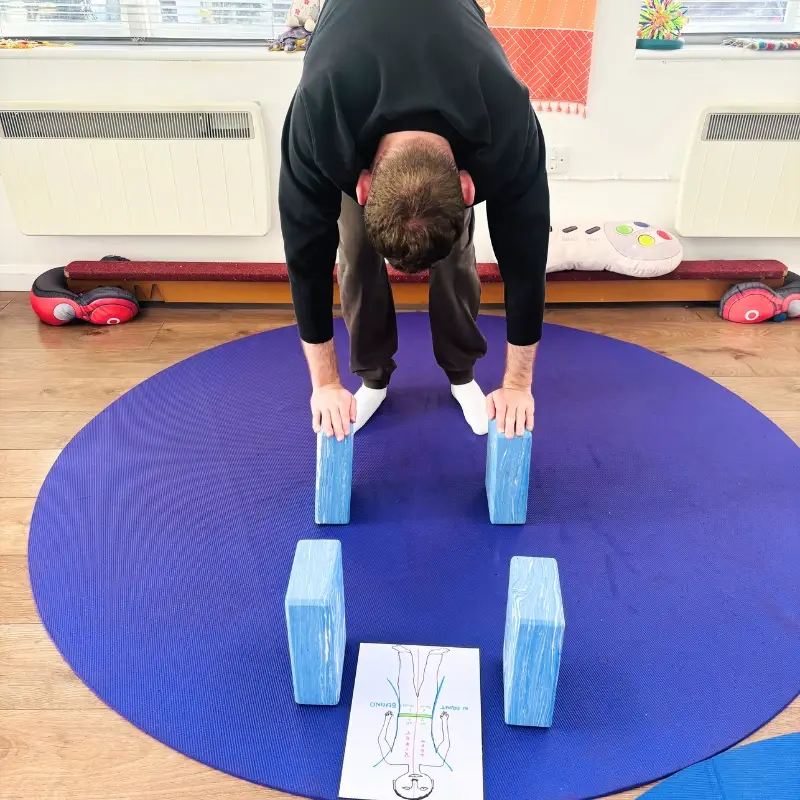
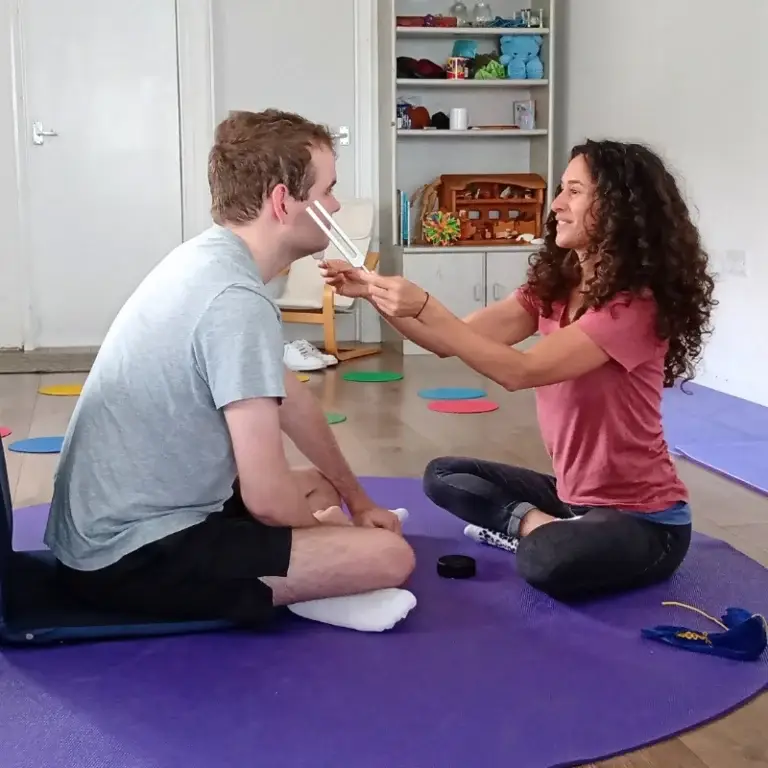
Neurodevelopmental Yoga Therapy approaches reflex integration through targeted movement sequences that re-pattern the neurological pathways associated with each retained reflex. By engaging the body in specific postures, rhythmic movements, and breath-directed activities, NDYT helps to gently stimulate and then inhibit residual reflex activity, supporting the brain in completing the integration process.
Unlike conventional reflex integration programmes that rely solely on floor-based exercises, yoga therapy offers a rich, multi-sensory context that engages the child’s whole nervous system. The relational, playful, and regulation-focused nature of yoga makes it particularly well-suited for neurodivergent children who may have had negative experiences with more directive therapeutic approaches.
What Families and Practitioners Can Expect
Reflex integration is a gradual process. Improvements are typically observed over weeks and months rather than days, and they span multiple domains, including attention, coordination, emotional regulation, sleep, and sensory tolerance. Parents often report that children seem “calmer in their bodies” as integration progresses.
At Yotism, reflex integration is at the heart of our NDYT approach. Our Foundation Training and Advanced Courses equip practitioners with the knowledge and tools to assess retained reflexes and design targeted yoga-based interventions for the children and young people they support.